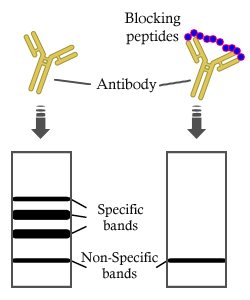
产品: GSDMD N-Terminal 抗体(小鼠 specific)
货号: DF13758
描述: Rabbit polyclonal antibody to GSDMD N-Terminal(specific)
应用: WB IHC IF/ICC
文献验证: WB, IHC, IF/ICC
反应: Mouse, Rat
分子量: 35kD(N-terminal),53kD(Pro);
蛋白号: Q9D8T2

浏览相似产品>>

   规格 价格 库存
 100ul RMB¥ 2300 现货
 200ul RMB¥ 3000 现货

货期: 当天发货

联系销售

产品描述

来源:
Rabbit
应用:
IF/ICC 1:100-1:500, IHC 1:50-1:200, WB 1:500-1:2000
*The optimal dilutions should be determined by the end user. For optimal experimental results, antibody reuse is not recommended.
*Tips:

WB: 适用于变性蛋白样本的免疫印迹检测. IHC: 适用于组织样本的石蜡(IHC-p)或冰冻(IHC-f)切片样本的免疫组化/荧光检测. IF/ICC: 适用于细胞样本的荧光检测. ELISA(peptide): 适用于抗原肽的ELISA检测.

反应:
Mouse, Rat
克隆:
Polyclonal
特异性:
GSDMD N-Terminal Antibody(Mouse specific) detects endogenous levels of total GSDMD N-Terminal(Mouse specific).
偶联:
Unconjugated.
纯化:
The antiserum was purified by peptide affinity chromatography using SulfoLink™ Coupling Resin (Thermo Fisher Scientific).
保存:
Rabbit IgG in phosphate buffered saline , pH 7.4, 150mM NaCl, 0.02% sodium azide and 50% glycerol. Store at -20 °C. Stable for 12 months from date of receipt.
别名:

展开/折叠

1810036L03Rik; DF 5L; DF5L; DFNA 5L; DFNA5L; FKSG 10; FKSG10; FLJ12150; Gasdermin D; Gasdermin domain containing 1; Gasdermin domain containing protein 1; Gasdermin domain-containing protein 1; Gasdermin-D; GasderminD; GSDMD; GSDMD_HUMAN; GSDMDC 1; GSDMDC1;

抗原和靶标

免疫原:

A synthesized peptide derived from Mouse GSDMD.

文献引用

1). Oxygen/sulfate radicals-generating CaS2O8 nanosonosensitizers induce PANoptosis and calcium overload for enhanced peritoneal metastasis immunotherapy. Science bulletin, 2025 (PubMed: 40118724) [IF=18.8]

Application: WB    Species: Mouse    Sample: CT26 cells

Fig. 4. In vitro evaluation of SDT-mediated PANoptosis and immune response activation. (a) Western blotting analysis of PANoptosis-related proteins in CT26 cells after different treatments. (b) Schematic illustration of SDT-mediated PANoptosis in tumor cells. MMP, mitochondrial membrane potential. US, ultrasound. (c) Schematic illustration of the experiment of DCs maturation. (d) CLSM images of CRT expression on CT26 cells treated with different therapies. CRT: calreticulin, Scale bar: 20 μm. (e) ATP and (f) HMGB1 released from CT26 cells after different treatments. ATP, adenosine triphosphate. HMGB1, high mobility group box-1 protein. (g) Flow cytometry plot and (h) quantification of DCs incubated with CT26 cells after different treatments in transwell chambers. (i–k) ELISA results of levels of (i) IFN-γ, (j) TNF-α, (k) IL-6 cytokines in the supernatant of bone marrow-derived DCs incubated with pretreated CT26 cells. P, PBS. Na, Na2S2O8. Ca, CaS2O8. * P < 0.05, ** P < 0.01, *** P < 0.001, **** P < 0.0001. ns, no significance.

2). PD-1+CD8+ T Cell-Mediated Hepatocyte Pyroptosis Promotes Progression of Murine Autoimmune Liver Disease. Advanced science (Weinheim, Baden-Wurttemberg, Germany), 2025 (PubMed: 39494472) [IF=15.1]

Application: WB    Species: Mouse    Sample: livers

Figure 6.PD‐1+CD8+ T cells from dnTGFβRII Aire−/− mice induce GSDMD mediated pyroptosis of hepatocytes. A) Detection of the expression levels of GSDMD, caspase‐1 and IL‐1β in the livers of Aire−/−, TG Aire+/− and TG Aire−/− mice by Western blot using anti‐GSDMD antibody (sc‐393581), anti‐caspase‐1 antibody (ab179515) and anti‐IL‐1β antibody (ab9722). B) Survival curves of TG Aire−/− mice treated in vivo with (n = 10) or without (n = 10) 50mg kg−1 disulfiram (DSF) by intraperitoneal injection every day from 7 days of age. C) Liver histology results of DSF treated (4‐week‐old) or untreated (about 2‐week‐old) TG Aire−/− mice. Scale bar in the upper row, 500 µm; scale bar in the bottom row, 100 µm. D) Immunohistochemistry results of the expressions of N‐GSDMD in the liver tissues from Aire−/− and TG Aire−/− mice. Scale bar, 100 µm. E) 1 × 10⁵ PD‐1+CD8+ T cells were co‐cultured with 1 × 10⁴ isolated primary hepatocytes and the cell morphology was observed by high content imaging system. Blue arrows reflect PD‐1+CD8+ T cells and red arrows demonstrate hepatocytes in the process of pyroptosis. Scale bar, 50 µm. F) Detection of the expression levels of GSDMD in AML12 cells with/without GSDMD knockout by Western blot using anti‐GSDMD antibody (ab219800). G) 1 × 10⁵ CD8+ T cells isolated from the livers of dnTGFβRII Aire−/− mice were co‐cultured with 1 × 10⁴ AML12 cells with/without GSDMD knockout and the cell morphology was imaged using a confocal microscope after 24 h. Scale bar in the left column, 100 µm; scale bar in the right column, 50 µm. H) The cell culture supernatants from (G) were detected the LDH levels and analyzed for cytotoxicity at 24 h. I) The cultured AML12 cells in (G) were labeled with FAM‐FLICA caspase‐1 and PI after 24h, then the cells were digested and detected the fluorescence signal using flow cytometry. Flow cytometry results show the fluorescence signal intensity of FLICA caspase‐1 and PI. WT co and KO co refer to wild type and GSDMD knockout AML12 cells which co‐cultured with PD‐1+CD8+ T cells respectively. J) Statistical analysis of the percentage of FLICA caspase‐1+ AML12 in total AML12 cells. Data are means ± SD. *p < 0.05; **p < 0.01; ***p < 0.001, by log‐rank survival analysis (B) or unpaired Student's t test (H) or one‐way ANOVA (J).

3). Interorgan communication in neurogenic heterotopic ossification: the role of brain-derived extracellular vesicles. Bone research, 2024 (PubMed: 38383487) [IF=14.3]

4). A cerium-based ferroptosis/PANoptosis nano-inducer for photothermal-enhanced combination therapy of breast cancer. Chemical Engineering Journal, 2025 [IF=13.2]

5). Neonatal-Inspired Reprogramming of Microglial Pan-Programmed Cell Death Enhances Regeneration in Adult Spinal Cord Injury. Research (Washington, D.C.), 2025 (PubMed: 40607322) [IF=11.0]

Application: WB    Species: Mouse    Sample:

Fig. 5. WFA attenuates microglial pan-PCD and promotes neuroprotection in vitro. (A) Schematic representation of BV2 microglial treatments: vehicle group (PBS treatment), LPS + adenosine group (LPS followed by adenosine treatment), and WFA group (LPS + adenosine followed by WFA intervention). (B) Quantification of apoptotic microglial cells (B2 + B4) (%) via flow cytometry. (C) Volcano plot of gene expression differences between WFA-treated and LPS + adenosine-treated groups. Specific GSEA pathways (Neurotransmitter secretion and Thanatoset) enriched in each group are displayed below. (D) GSEA enrichment comparing WFA-treated microglia to LPS + adenosine-treated microglia. (E) Heatmap of Thanatoset gene expression across vehicle, LPS + adenosine, and WFA groups. The upper panel shows Z scores (scaled FPKM values), while the lower dot plot highlights genes with log2|FC| > 1 and P < 0.05, where yellow represents up-regulated genes and blue represents down-regulated genes. (F) Western blot analysis of GSDMD-N, CASP8, Cleaved-CASP8, and CD68 protein levels across groups, demonstrating reduced protein levels in WFA-treated groups compared to LPS + adenosine groups. (G) Quantification of CTSL+ microglial area across groups (n = 3). (H) Western blot analysis of NF-κB pathway components (TLR2, p-P65, IκBα, and p-IκBα). (I) ELISA analysis of inflammatory cytokines (IL-1β, TNF-α, and IL-6) in culture supernatants (n = 5). (J) Schematic of the Transwell coculture system used to assess the effects of WFA-treated microglia on neurons. (K) Representative immunofluorescence images of neurons cocultured with microglia, showing NEUN and TUNEL costaining across groups. (L) Quantification of TUNEL+ and NeuN+ colocalization ratios (n = 3). (M) Sholl analysis of DRG neuron explants cocultured with 3 different microglial groups. Statistical analysis was performed using one-way ANOVA with Tukey (B, G, I, and L).

6). PUFAs-enriched oil bodies as natural anti-osteoarthritis drug delivery platform. Materials Today Bio, 2025 [IF=10.2]

Application: WB    Species: Mouse    Sample: RAW264.7 cells

Fig. 4. Cur/OBs regulates macrophages polarization via PPARγ/NF-κB signaling pathway. (A, B) CLSM images showing RAW264.7 cells incubated with different drugs. Scale bar: 20 μm. (C–E) The level of TNF-α,IL-1β and IL-6 in M1 macrophages treated with different drugs was determined using ELISA. (F) Volcano plot showing the genes regulated by the treatment of Cur/OBs. (G) KEGG pathway enrichment analysis of differentially expressed genes in M1 group and M1+Cur/OBs treatment group. (H) Western blotting showing the expression of PPARγ,NF-κb p65 and Phospho-NF-κB p65 with various treatment groups. (I) Schematic diagram of the mechanism by Cur/OBs regulate the macrophages polarization via PPARγ/NF-κB signaling pathway. Data are presented as mean ± SD.

7). Dual-function MgSrCeAl-LDH nanosheets enable both ROS clearance and enhanced angiogenesis for myocardial ischemia/reperfusion injury therapy. Journal of nanobiotechnology, 2025 (PubMed: 41139778) [IF=10.2]

8). Targeting RelA/NLRP3/CCL3 axis mitigates microglia inflammatory response and promotes recovery after spinal cord injury. Brain, behavior, and immunity, 2025 (PubMed: 40691997) [IF=8.8]

Application: WB    Species: Mouse    Sample:

Fig. 3. RelA binds to Nlrp3 promoter and upregulates its expression in activated microglia. (A) Western blot analysis of NLRP3, RelA, Caspase1 and GSDMD-N protein expression levels in BV2 cells treated with PBS (control) or LPS (1 μg/mL) + ATP (3 mM) for 4 h and the corresponding quantification. The inter-group comparison was performed using an independent samples t-test. Statistical difference was defined as *p < 0.05, **p < 0.01, ***p < 0.001, and ****p < 0.0001. Data represent mean ± SEM from three independent biological replicates. (B) Computationally predicted sequence of RelA binding sites within Nlrp3 promoter region using JASPAR (http://jaspar.genereg.net). (C) Luciferase reporter assay in BV2 microglia transfected with Nlrp3 WT luciferase constructs. The inter-group comparison was performed using an independent samples t-test. Statistical difference was defined as ***p < 0.001. Data represent mean ± SEM from three independent biological replicates. (D) Relative Nlrp3 promoter enrichment measured by ChIP-qPCR. Enrichment was calculated relative to IgG and presented as fold change. The inter-group comparison was performed using an independent samples t-test. Statistical difference was defined as ***p < 0.001. Data represent mean ± SEM from three independent biological replicates. (E) Luciferase reporter assay assessing Nlrp3 promoter activity in BV2 microglia. (F) Luciferase reporter assay assessing Nlrp3 promoter activity in primary microglia. Microglia were transfected with Nlrp3 WT, MutA, or MutB luciferase reporter constructs, along with the pTK-Renilla luciferase plasmid as an internal control. Luciferase activity was measured 48 h post-transfection and normalized to Renilla luciferase activity. The inter-group comparison was performed using an independent samples t-test. Statistical difference was defined as ns, not significant, *p < 0.05, and **p < 0.01. Data represent mean ± SEM from three independent biological replicates.

9). A bufalin and CRISPR/Cas9 ribonucleoprotein-loaded calcium lactate nanomedicine for pyroptosis/apoptosis and synergistic cancer immunotherapy. Materials today. Bio, 2025 (PubMed: 41322154) [IF=8.7]

Application: WB    Species: Mouse    Sample:

Fig. 3. CLBRP affects intracellular Ca2+ levels and induces pyroptosis. (A) Schematic illustration of CLBRP-mediated pyroptosis (created in BioRender.com). (B, C) Fluorescence images and intracellular Ca2+ levels detected by the Fluo-4 AM probe were quantified in cells (scale bar = 25 μm). (D) Differences in Na+/K+-ATPase activity after treatment with different drugs. (E, F) Mitochondrial membrane potential measured by JC-1 and corresponding quantitative analysis in cells (scale bar = 50 μm). IL-18 (G) and IL-1β (H) release in the different groups. (I, J) Caspase-1 immunofluorescence images and corresponding quantitative analysis of cells following various treatments (scale bar = 50 μm). (K) Western blot of the pyroptosis-related proteins caspase-1, cleaved caspase-1, and GSDMD-N (n = 6). The data are shown as the means ± SDs. Statistical significance was determined by one-way ANOVA with Tukey's two-tailed LSD multiple-comparisons test: ns, not significant; ∗P < 0.05, ∗∗P < 0.01.

10). A slow-releasing donor of hydrogen sulfide inhibits neuronal cell death via anti-PANoptosis in rats with spinal cord ischemia‒reperfusion injury. Cell communication and signaling : CCS, 2024 (PubMed: 38217003) [IF=8.4]

加载更多

限制条款

产品的规格、报价、验证数据请以官网为准,官网链接:www.affbiotech.com | www.affbiotech.cn(简体中文)| www.affbiotech.jp(日本語)

产品的数据信息为Affinity所有,未经授权不得收集Affinity官网数据或资料用于商业用途,对抄袭产品数据的行为我们将保留诉诸法律的权利。

产品相关数据会因产品批次、产品检测情况随时调整,如您已订购该产品,请以订购时随货说明书为准,否则请以官网内容为准,官网内容有改动时恕不另行通知。

Affinity保证所销售产品均经过严格质量检测。如您购买的商品在规定时间内出现问题需要售后时,请您在Affinity官方渠道提交售后申请。

产品仅供科学研究使用。不用于诊断和治疗。 

产品未经授权不得转售。

Affinity Biosciences将不会对在使用我们的产品时可能发生的专利侵权或其他侵权行为负责。Affinity Biosciences, Affinity Biosciences标志和所有其他商标所有权归Affinity Biosciences LTD.