产品: xCT 抗体
货号: DF12509
描述: Rabbit polyclonal antibody to xCT
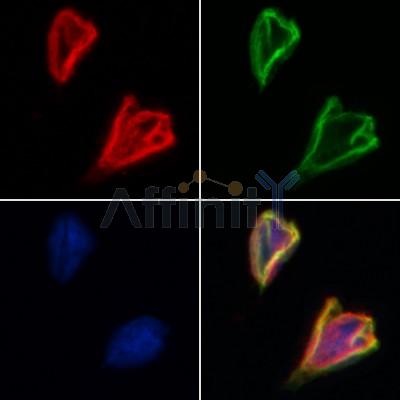
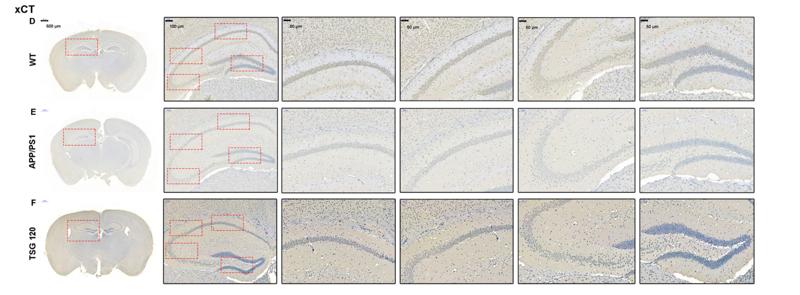
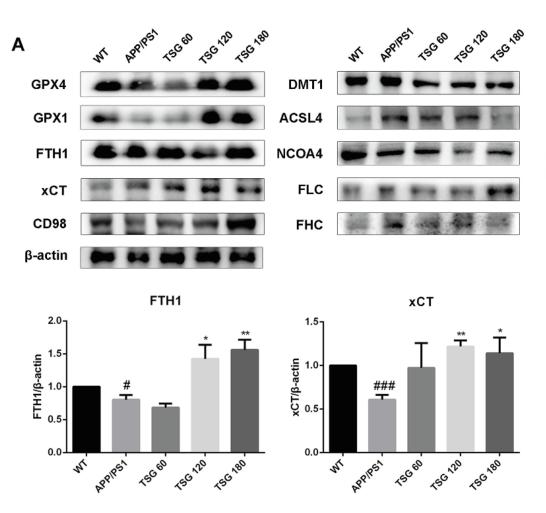
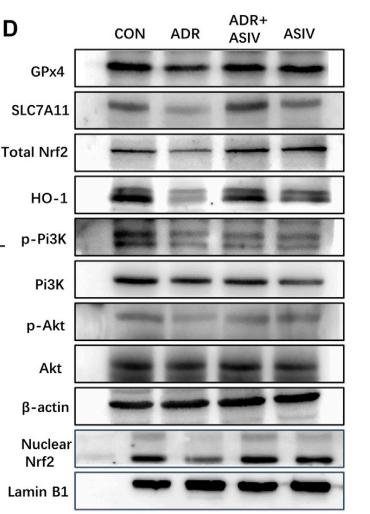
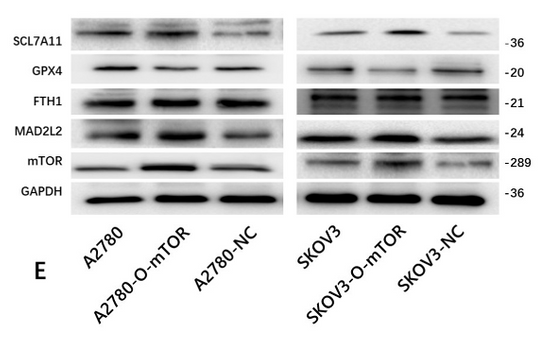
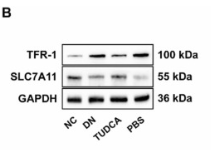
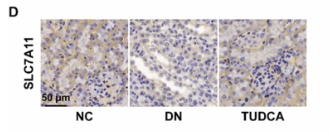
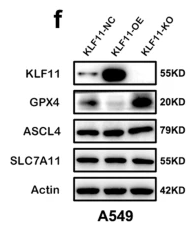
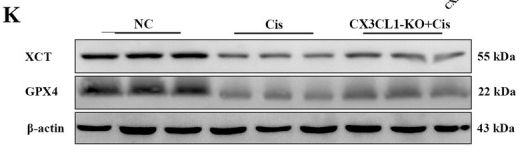
应用: WB IHC IF/ICC
文献验证: WB, IHC, IF/ICC
反应: Human, Mouse, Rat, Monkey
预测: Pig, Horse, Rabbit, Dog
分子量: 37 kDa; 55kD(Calculated).
蛋白号: Q9UPY5
RRID: AB_2845314

浏览相似产品>>

   规格 价格 库存
 50ul RMB¥ 1250 现货
 100ul RMB¥ 2300 现货
 200ul RMB¥ 3000 现货

货期: 当天发货

联系销售

产品描述

来源:
Rabbit
应用:
WB 1:500-1:2000, IHC 1:50-1:200, IF/ICC 1:100-1:500
*The optimal dilutions should be determined by the end user. For optimal experimental results, antibody reuse is not recommended.
*Tips:

WB: 适用于变性蛋白样本的免疫印迹检测. IHC: 适用于组织样本的石蜡(IHC-p)或冰冻(IHC-f)切片样本的免疫组化/荧光检测. IF/ICC: 适用于细胞样本的荧光检测. ELISA(peptide): 适用于抗原肽的ELISA检测.

反应:
Human, Mouse, Rat, Monkey
预测:
Pig(93%), Horse(%), Rabbit(%), Dog(%)
克隆:
Polyclonal
特异性:
xCT Antibody detects endogenous levels of total xCT.
RRID:
AB_2845314
引用格式: Affinity Biosciences Cat# DF12509, RRID:AB_2845314.
偶联:
Unconjugated.
纯化:
The antiserum was purified by peptide affinity chromatography using SulfoLink™ Coupling Resin (Thermo Fisher Scientific).
保存:
Rabbit IgG in phosphate buffered saline , pH 7.4, 150mM NaCl, 0.02% sodium azide and 50% glycerol. Store at -20 °C. Stable for 12 months from date of receipt.
别名:

展开/折叠

Amino acid transport system xc xCT antibody; Amino acid transport system xc-; Calcium channel blocker resistance protein CCBR1; Calcium channel blocker resistance protein CCBR1 antibody; CCBR1; Cysteine/glutamate transporter antibody; Cystine/glutamate transporter; OTTHUMP00000164578; SLC7A11; Solute carrier family 7 (anionic amino acid transporter light chain, xc- system), member 11; solute carrier family 7; Solute carrier family 7 member 11; Solute carrier family 7, (cationic amino acid transporter, y+ system) member 11; SYSTEM Xc(-) TRANSPORTER-RELATED PROTEIN; xCT; XCT_HUMAN;

抗原和靶标

免疫原:

A synthesized peptide derived from human xCT, corresponding to a region within the internal amino acids.

Uniprot:
基因/基因ID:
序列:
MVRKPVVSTISKGGYLQGNVNGRLPSLGNKEPPGQEKVQLKRKVTLLRGVSIIIGTIIGAGIFISPKGVLQNTGSVGMSLTIWTVCGVLSLFGALSYAELGTTIKKSGGHYTYILEVFGPLPAFVRVWVELLIIRPAATAVISLAFGRYILEPFFIQCEIPELAIKLITAVGITVVMVLNSMSVSWSARIQIFLTFCKLTAILIIIVPGVMQLIKGQTQNFKDAFSGRDSSITRLPLAFYYGMYAYAGWFYLNFVTEEVENPEKTIPLAICISMAIVTIGYVLTNVAYFTTINAEELLLSNAVAVTFSERLLGNFSLAVPIFVALSCFGSMNGGVFAVSRLFYVASREGHLPEILSMIHVRKHTPLPAVIVLHPLTMIMLFSGDLDSLLNFLSFARWLFIGLAVAGLIYLRYKCPDMHRPFKVPLFIPALFSFTCLFMVALSLYSDPFSTGIGFVITLTGVPAYYLFIIWDKKPRWFRIMSEKITRTLQIILEVVPEEDKL

种属预测

种属预测:

score>80的预测可信度较高,可尝试用于WB检测。*预测模型主要基于免疫原序列比对,结果仅作参考,不作为质保凭据。

Species
Results
Score
Pig
93
Horse
93
Dog
93
Rabbit
93
Xenopus
79
Chicken
77
Zebrafish
64
Bovine
0
Sheep
0
Model Confidence:
High(score>80) Medium(80>score>50) Low(score<50) No confidence

研究背景

功能:

Sodium-independent, high-affinity exchange of anionic amino acids with high specificity for anionic form of cystine and glutamate.

细胞定位:

Membrane>Multi-pass membrane protein.

Extracellular region or secreted Cytosol Plasma membrane Cytoskeleton Lysosome Endosome Peroxisome ER Golgi apparatus Nucleus Mitochondrion Manual annotation Automatic computational assertionSubcellular location
蛋白家族:

Belongs to the amino acid-polyamine-organocation (APC) superfamily. L-type amino acid transporter (LAT) (TC 2.A.3.8) family.

研究领域

· Cellular Processes > Cell growth and death > Ferroptosis.   (View pathway)

文献引用

1). Exosomes secreted from cardiomyocytes suppress the sensitivity of tumor ferroptosis in ischemic heart failure. Signal transduction and targeted therapy, 2023 (PubMed: 36967385) [IF=40.8]

2). NIR-responsive bio-system with sequential antibacterial and immunomodulatory effects for the treatment of periodontitis. Bioactive materials, 2025 (PubMed: 40496626) [IF=18.9]

Application: WB    Species: Rat    Sample:

Fig. 5. Hemin@ER-IR808 promoted mitophagy of macrophages. (A) The TEM images of macrophages with different treatment, scale bar: 500 nm. (B) The protein expression of Nrf2, HO-1, SLC7A11, GPX4, PINK1 and Parkin2. (C) The semi-quantitative analysis of panel B. (D) The confocal images of JC-1 in macrophages, scale bar: 20 μm. (E) The semi-quantitative analysis of panel D. Groups setting: (1) Control group, macrophages without any treatment; (2) P. g group, macrophages with intracellular P. g infection; (4) NIR + Hemin@ER group, macrophages with intracellular P. g infection, Hemin@ER treatment and NIR irradiation; (5) NIR + Hemin@ER-IR808 group, macrophages with intracellular P. g infection, Hemin@ER-IR808 treatment and NIR irradiation. ∗P < 0.05, ∗∗P < 0.01, ∗∗∗P < 0.001 (vs. (1) Control group); #P < 0.05, ##P < 0.01, ###P < 0.001 (vs. (2) P. g group); ⋇P < 0.05,⋇⋇P < 0.01, ⋇⋇⋇P < 0.001 (vs. (4) NIR + Hemin@ER group).

3). Polyamine-mediated ferroptosis amplification acts as a targetable vulnerability in cancer. Nature communications, 2024 (PubMed: 38504107) [IF=16.6]

4). Targeting ALDH16A1 mediated thioredoxin lysosomal degradation to enhance ferroptosis susceptibility in SMARCA4-deficient NSCLC. Nature communications, 2025 (PubMed: 40897711) [IF=16.6]

5). FOXO1-NCOA4 Axis Contributes to Cisplatin-Induced Cochlea Spiral Ganglion Neuron Ferroptosis via Ferritinophagy. Advanced science (Weinheim, Baden-Wurttemberg, Germany), 2024 (PubMed: 39206719) [IF=15.1]

6). Metabolomic and Cellular Mechanisms of Drug-Induced Ototoxicity and Nephrotoxicity: Therapeutic Implications of Uric Acid Modulation. Advanced science (Weinheim, Baden-Wurttemberg, Germany), 2025 (PubMed: 40041973) [IF=15.1]

7). Piezo1 Upregulation in Monocyte-Derived Macrophages Impairs Post-Myocardial Infarction Cardiac Repair via Defective Efferocytosis and Enhanced Ferroptosis. Advanced science (Weinheim, Baden-Wurttemberg, Germany), 2025 (PubMed: 41214880) [IF=15.1]

Application: WB    Species: Mouse    Sample:

Figure 5 Piezo1 induced defective efferocytosis in MoMs via SLC7A11 upregulation. A) Cluster analysis of the differentially expressed genes (|log2Fold Change| > 1, p < 0.05) identified by RNA-seq of BMDMs treated with DMSO or Yoda1 (5 µm) for 12 h) B. GO analysis revealed the enriched biological processes (BPs). C) The 17 genes upregulated according to the GO_BP analysis, including genes with read counts >1000, were analyzed by quantitative PCR in BMDMs from Piezo1fl/fl+MI and Piezo1Lyz2+MI mice (n = 6 mice per group). D. Quantitative PCR analysis of the 17 genes downregulated according to the GO_BP analysis, including genes with read counts >1000 (n = 6 mice per group). E) Representative Western blots and quantification showing SLC7A11 and SLC15A3 protein levels in BMDMs treated with DMSO or Yoda1 (5 µm) for 12 h (n = 4). F,G) Representative Western blots and quantification of SLC7A11, SLC15A3 and Piezo1 protein levels in BMDMs from Piezo1Lyz2+MI and Piezo1fl/fl+MI mice (n = 6 mice per group). H) Confocal microscopy images and quantification of BMDMs (F4/80, red) that engulfed PKH67-labeled apoptotic Jurkat cells (green) (n = 4). The data in (C, D, E and F) were analyzed by unpaired Student's t test. Other data were analyzed via one-way ANOVA, followed by the Bonferroni post hoc correction.

8). Carbon dots-mediated lysosomal iron sequestration for cancer immunostimulation. Chemical Engineering Journal, 2025 [IF=12.9]

9). PRODH2-Mediated Metabolism in the Bone Microenvironment Promotes Breast Cancer Metastasis. Cancer research, 2025 (PubMed: 40749014) [IF=12.5]

Application: WB    Species: Mouse    Sample:

Figure 4. PRODH2 suppresses ferroptosis and regulates osteoclast differentiation. A, Untargeted metabolomics analysis in PRODH2-overexpressing cells vs. vector cells with treatment of Hyp. B, Changes in intracellular GSH levels upon PRODH2 overexpression (OE) or knockout in SCP2 cells with treatment of Hyp. C, Western blot analysis of ferroptosis-related proteins in indicated cells following Hyp treatment. Band intensities were normalized to β-actin and expressed as fold change relative to control. D, mRNA expression levels of SLC7A11 in different PRODH2 expression conditions with treatment of Hyp. E, Relative expression levels of intracellular GSH in breast cancer indicated cells with treatment of Hyp. F, Representative images and quantitative analysis of C11-BODIPY oxidation (green)/reduction (red) ratio in cells. Scale bar, 100 μm. G, Representative staining images and quantification of osteoclast differentiation in the presence of CM from indicated cells with treatment of Hyp. Black arrows, multinuclear TRAP+ osteoclasts. Scale bar, 100 μm. H, Left, μCT, hematoxylin and eosin (H&E), and TRAP staining images of bone metastasis in mice after intracardiac injection. Right, quantification of the positive area of Sirius red staining, BLI signals, μCT osteolytic lesion sites, and TRAP+ osteoclasts along the bone–tumor interface of metastases. n = 6 mice per group. Each experiment was performed in triplicate and independently repeated three times. Data are presented as the mean ± SD of n = 3 biologically independent samples. Scale bar, 100 μm. *, P < 0.05; **, P < 0.01. B, bone, T, tumor; M, marrow; NC, negative control.

Application: IF/ICC    Species: Mouse    Sample:

Figure 4. PRODH2 suppresses ferroptosis and regulates osteoclast differentiation. A, Untargeted metabolomics analysis in PRODH2-overexpressing cells vs. vector cells with treatment of Hyp. B, Changes in intracellular GSH levels upon PRODH2 overexpression (OE) or knockout in SCP2 cells with treatment of Hyp. C, Western blot analysis of ferroptosis-related proteins in indicated cells following Hyp treatment. Band intensities were normalized to β-actin and expressed as fold change relative to control. D, mRNA expression levels of SLC7A11 in different PRODH2 expression conditions with treatment of Hyp. E, Relative expression levels of intracellular GSH in breast cancer indicated cells with treatment of Hyp. F, Representative images and quantitative analysis of C11-BODIPY oxidation (green)/reduction (red) ratio in cells. Scale bar, 100 μm. G, Representative staining images and quantification of osteoclast differentiation in the presence of CM from indicated cells with treatment of Hyp. Black arrows, multinuclear TRAP+ osteoclasts. Scale bar, 100 μm. H, Left, μCT, hematoxylin and eosin (H&E), and TRAP staining images of bone metastasis in mice after intracardiac injection. Right, quantification of the positive area of Sirius red staining, BLI signals, μCT osteolytic lesion sites, and TRAP+ osteoclasts along the bone–tumor interface of metastases. n = 6 mice per group. Each experiment was performed in triplicate and independently repeated three times. Data are presented as the mean ± SD of n = 3 biologically independent samples. Scale bar, 100 μm. *, P < 0.05; **, P < 0.01. B, bone, T, tumor; M, marrow; NC, negative control.

Application: IHC    Species: Mouse    Sample:

Figure 4. PRODH2 suppresses ferroptosis and regulates osteoclast differentiation. A, Untargeted metabolomics analysis in PRODH2-overexpressing cells vs. vector cells with treatment of Hyp. B, Changes in intracellular GSH levels upon PRODH2 overexpression (OE) or knockout in SCP2 cells with treatment of Hyp. C, Western blot analysis of ferroptosis-related proteins in indicated cells following Hyp treatment. Band intensities were normalized to β-actin and expressed as fold change relative to control. D, mRNA expression levels of SLC7A11 in different PRODH2 expression conditions with treatment of Hyp. E, Relative expression levels of intracellular GSH in breast cancer indicated cells with treatment of Hyp. F, Representative images and quantitative analysis of C11-BODIPY oxidation (green)/reduction (red) ratio in cells. Scale bar, 100 μm. G, Representative staining images and quantification of osteoclast differentiation in the presence of CM from indicated cells with treatment of Hyp. Black arrows, multinuclear TRAP+ osteoclasts. Scale bar, 100 μm. H, Left, μCT, hematoxylin and eosin (H&E), and TRAP staining images of bone metastasis in mice after intracardiac injection. Right, quantification of the positive area of Sirius red staining, BLI signals, μCT osteolytic lesion sites, and TRAP+ osteoclasts along the bone–tumor interface of metastases. n = 6 mice per group. Each experiment was performed in triplicate and independently repeated three times. Data are presented as the mean ± SD of n = 3 biologically independent samples. Scale bar, 100 μm. *, P < 0.05; **, P < 0.01. B, bone, T, tumor; M, marrow; NC, negative control.

10). Retinol Saturase Mediates Retinoid Metabolism to Impair a Ferroptosis Defense System in Cancer Cells. Cancer research, 2023 (PubMed: 37184371) [IF=12.5]

加载更多

限制条款

产品的规格、报价、验证数据请以官网为准,官网链接:www.affbiotech.com | www.affbiotech.cn(简体中文)| www.affbiotech.jp(日本語)

产品的数据信息为Affinity所有,未经授权不得收集Affinity官网数据或资料用于商业用途,对抄袭产品数据的行为我们将保留诉诸法律的权利。

产品相关数据会因产品批次、产品检测情况随时调整,如您已订购该产品,请以订购时随货说明书为准,否则请以官网内容为准,官网内容有改动时恕不另行通知。

Affinity保证所销售产品均经过严格质量检测。如您购买的商品在规定时间内出现问题需要售后时,请您在Affinity官方渠道提交售后申请。

产品仅供科学研究使用。不用于诊断和治疗。 

产品未经授权不得转售。

Affinity Biosciences将不会对在使用我们的产品时可能发生的专利侵权或其他侵权行为负责。Affinity Biosciences, Affinity Biosciences标志和所有其他商标所有权归Affinity Biosciences LTD.